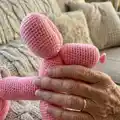
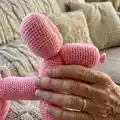
About This Niahs Balloon Dog Amigurumi Pattern
This pattern creates a whimsical balloon dog amigurumi by crocheting a long balloon tube and shaping it into legs, body, neck and head. The design uses single crochet worked in spirals with clear round-by-round counts. The finished dog measures roughly 20 cm tall and 23 cm from tail to nose using recommended yarn and hook.
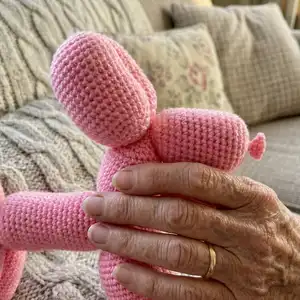
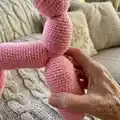
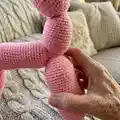
The pattern includes a full rounds list, stuffing reminders, and a step-by-step photo guide for sewing the joints. Youll also find yarn, hook and gauge details to help you achieve the correct size.
Why You'll Love This Niahs Balloon Dog Amigurumi Pattern
I absolutely love this pattern because it turns simple single crochet stitches into a playful, sculptural balloon dog that brings a smile. I enjoy how the segment-by-segment construction makes shaping very visual and satisfying. The pattern is forgiving and allows you to adjust stuffing to get the exact silhouette you want. I love sharing this pattern because it is unique, whimsical, and perfect for handmade gifts or decorative conversation pieces.
Switch Things Up
I love how versatile this balloon dog is for color changes; I often make stripes by alternating colors every few rounds to give the dog a playful look.
I sometimes use a thicker cotton yarn and a larger hook to create a chunky, sturdier version that works well as a pillow or floor toy.
For tiny keychain versions I use finer yarn and a smaller hook to scale down the pattern into a mini charm.
I like to add embroidered eyes or tiny felt patches to personalize faces and give each dog a unique expression.
If I want posable legs I add a thin wire through the leg segments before stuffing, securing the wire ends inside the body.
I experiment with stuffing firmness to change how round or elongated each bump becomes — softer stuffing gives a floppy look, firmer stuffing gives crisp balloon bumps.
I sometimes attach a small collar or bow using contrast yarn to make a gift-ready finished piece with minimal extras.
To change size quickly, I swap yarn weight and recalculate how many stitches I want per 10 cm, then adjust rounds to keep proportions.
I also try alternating surface crochet rows or slip stitch ridges along the body for a textured, modern look.
When sewing joints I always pin first and compare both sides for symmetry; you can also baste with a contrasting thread to preview placement before sewing permanently.
Common Mistakes & How to Fix Them
✗ Not checking gauge before starting and ending up with the wrong size; always make a 10 cm swatch and adjust hook size to match 24 sc per 10 cm.
✗ Forgetting to stuff segments as you go, which results in uneven lumps; add stuffing gradually and shape each bump while crocheting.
✗ Skipping the stitch count during increases or decreases leads to mismatched segments; count stitches after each round to ensure accuracy.
✗ Sewing joints without pinning first can cause misalignment; pin or baste the joints in place and compare to the photos before permanently sewing them.
✗ Tightening the yarn too much when closing the nose can pull the shape in; use a gentle even tension and finish with a knot or small neat stitch to close the hole.