🧢 Beautiful ✨ Detailed πŸ’ Adorable

Daisy Flowers Car Hanging Amigurumi Pattern

Daisy Flowers Car Hanging Amigurumi Pattern
4.3β˜… Rating
5-7 Hours Time Needed
2.8K Made This
βœ‚οΈ

Intermediate Level

Ideal for those with basic crochet experience, featuring slightly more advanced stitches and techniques to expand your skills.

⏱️

Weekend Treat

Takes 5-7 hours, making it an enjoyable project to finish over a couple of days.

🎁

Tiny Treasure

Small, sweet, and gift-worthy creations that fit perfectly in the palm of your hand with detailed charm.

About This Daisy Flowers Car Hanging Amigurumi Pattern

This pattern teaches you to crochet a miniature potted daisy arrangement for a car hanging or small decoration. You will make multiple flower types, stems, soil and a hanging pot with clear round-by-round instructions. The design uses fine yarn and small hooks to create delicate, defined petals and textured pots.
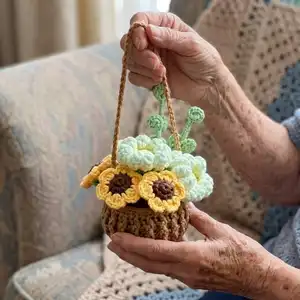
Daisy Flowers Car Hanging Amigurumi Pattern crochet pattern - detailed view of completed project

Each piece is worked in the round and joined seamlessly where noted, with assembly steps to attach stems and flowers into the pot. Helpful photos and tips guide you through stuffing, wiring, and finishing.

Why You'll Love This Daisy Flowers Car Hanging Amigurumi Pattern

I absolutely love this pattern because it turns simple stitches into a tiny bouquet full of personality and texture. I enjoy how the petals pop using HDC clusters and how the pot's post stitches add a lovely ribbed detail. I made this to be a portable, giftable project that works up fairly quickly but still feels special. I hope you enjoy customizing colors and arranging your own miniature garden as much as I did.

Daisy Flowers Car Hanging Amigurumi Pattern step 1 - construction progress Daisy Flowers Car Hanging Amigurumi Pattern step 2 - assembly progress Daisy Flowers Car Hanging Amigurumi Pattern step 3 - details and accessories Daisy Flowers Car Hanging Amigurumi Pattern step 4 - final assembly and finishing

Switch Things Up

I love how easy it is to customize colorways in this pattern β€” I often switch to pastel shades for a softer, nursery-friendly hanging.

I sometimes use a bulkier yarn and a larger hook to make a chunky version that works well as a keychain or bag charm.

I like to add embroidered veins or tiny french knots to the center for extra character and texture.

For a more durable piece, I wrap the stem wire more tightly and use floral tape under the yarn wrapping to protect the yarn from wear.

If I want a more natural look, I stagger flower heights and bend wired stems slightly for variety before securing them in the pot.

I occasionally add tiny crocheted leaves or buds to fill gaps and create a fuller bouquet.

To make a mobile, I create several smaller pots and hang them at different lengths from a wooden hoop for a playful display.

I also experiment with bead accents or metallic thread for a subtle shimmer in the center of the flower.

If I need the piece to be travel-friendly, I use foam soil (Type 2) so the stems stay securely in place without shifting.

I recommend trying different stitch heights for petals β€” swapping HDC for DC or TRC will change petal fullness and drama for unique styles.

Common Mistakes & How to Fix Them

βœ— Skipping stitch markers during rounds can cause you to lose the beginning of a round and miscount increases; place a marker at the start of each round and move it up as you go. βœ— Using the wrong hook size will change the finished size and tension of the flowers; match the recommended 2.5–3.0mm hooks and swatch to check gauge before starting. βœ— Forgetting to leave tails for wiring or sewing will make assembly harder; cut yarn and leave a short tail when instructed for wrapping wire or a long tail for sewing. βœ— Not stuffing petals at the recommended petal number will flatten the flower; start stuffing from the specified petal (for example from the 9th or 4th petal) to get the intended shape. βœ— Pulling yarn too tightly when wrapping wire for stems will distort the leaves and bend the wire; wrap yarn snugly but allow a thin layer of yarn so the stem still looks natural. βœ— Ignoring the BLO/FLO instructions for the pot will change the texture; make sure to work Back Loop Only (BLO) where specified to achieve the ribbed pot effect.
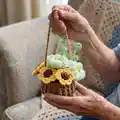
Daisy Flowers Car Hanging Amigurumi Pattern

Create a charming daisy flower car hanging with this detailed crochet pattern. You will make tiny potted daisies, sunflowers, stems and a hanging pot β€” perfect for gifting or brightening your car. The pattern includes step-by-step rounds, petal shaping, stem assembly and pot construction so you can follow along with confidence. Suitable for makers who enjoy small amigurumi projects with neat finishing details.

Intermediate 5-7 Hours

Materials Needed for Daisy Flowers Car Hanging Amigurumi Pattern

β€” Main Fabric

  • 01
    Super fine yarn, 1.8 oz (50 g) skeins for main colors
  • 02
    Color A: Green - small amount for stems and leaves
  • 03
    Color B: White - small amount for daisy petals
  • 04
    Color C: Yellow - small amount for daisy centers and yellow petals
  • 05
    Color D: Brown - small amount for sunflower centers and pot detail
  • 06
    Additional small amounts of blue for accents if desired

β€” Tools Required

  • 01
    Crochet hook size 2.5-3.0 mm (recommended for flowers)
  • 02
    Crochet hook size 3.0 mm (for pots - pattern uses 3mm for pots)
  • 03
    Stitch markers
  • 04
    Sewing/yarn needle for finishing
  • 05
    Scissors
  • 06
    Hot gun glue
  • 07
    Cotton or polyester stuffing
  • 08
    Wire for stems
  • 09
    Foam (to fit inside pot) for Type 2 soil
  • 10
    Pins for assembly (optional)

Progress Tracker

0% Complete

β€” Daisy Flower :

Round 1 :

Pistils & Peduncle (green & yellow) (make 2 : one by green one by yellow) MR, 6 SC (6sts)

Round 2 :

6 SC inc (12sts)

Round 3 :

12 SC (12sts)

Info :

Petal (white) Seamless piece Join with petal crochet

Round 4 :

(chain 8, You're going to be working into the second from the hook: 7 HDC, slst in next st) x 12 times (start stuffing from 9th petal). *wrap yarn around the stems*

β€” Yellow Flower :

Round 1 :

Pistils & Peduncle (green & brown) (make 2 piece : one by green one by brown) MR, 6 SC (6sts)

Round 2 :

6 SC inc (12sts)

Info :

Petal (yellow) Seamless piece Join with petal crochet

Round 3 :

Chain 2, 3 HDC in one st. Chain 2, sl st in next st. X 6 times (start stuffing from the 4th petal)

β€” Eucalyptus Stems :

Round 1 :

Row 1 (make 2) : MR, 8 SC (6sts). Cut yarn and leave a short tail for wrap wire

Round 2 :

Row 1 (make 4) : MR, 6 SC (6sts). Cut yarn and leave a short tail for wrap wire

Infos :

The first one we stick 2 piece (8sc piece) together and start wrap around the wire to stick each leaves on the stem (look like photo)

β€” Pots :

Round 1 :

Using 3mm size hook Row 1: 8 SC (8)

Round 2 :

8 INC (16)

Round 3 :

(SC, INC) 8 times (24)

Round 4 :

(2 SC, INC) 8 times (32)

Round 5 :

(3 SC, INC) 8 times (40)

Round 6 :

BLO 40 DC (40)

Round 7-9 :

1 FPDC, 1 BPDC repeat to end (40)

Round 10 :

40 SC (40)

Round 11 :

40 SL ST

Info :

Continue chain 70 to make hanging

β€” The Soil :

Round 1 :

Type 1: Row 1: 8 SC in an MR (8sts)

Round 2 :

8 SC INC (16sts)

Round 3 :

(1 SC + 1 INC) 8 times (24sts)

Round 4 :

(2 SC + 1 INC) 8 times (32sts)

Round 5-9 :

SC in each st to end

Round 10 :

(2 SC + 1 DEC) 8 times (24sts)

Round 11 :

(1 SC + 1 DEC) 8 times (16sts)

Info :

*stuffing*

Round 12 :

8 DEC (8sts)

Info :

Cut yarn and leave a long tail for sewing, close off the hole.

Info :

Type 2: Cut the foam to fit the size of the pot and place the foam in the plant pot

β€” Mixed Flowers :

Info :

This is all we have. Finally fixed together. Put the soil in plant pots. Insert each flower into a pots.

Assembly Instructions

  • Put the soil (Type 1 stuffed soil or Type 2 foam) into the plant pot and position it so stems will be supported and stable.
  • Insert each flower stem into the soil foam or stuffed soil and arrange the daisies and yellow flowers into a pleasing cluster, referencing the photos for placement.
  • Wrap and secure wires: for eucalyptus stems, stick two small pieces together and wrap yarn around the wire to attach leaves and secure them on the stem as shown in the photos.
  • Sew the pot top closed if you used the stuffed soil option, leaving a long tail, and weave in the ends neatly to hide the join and secure the flowers.

Important Notes

  • πŸ’‘Start stuffing petals at the recommended petal number (start stuffing daisies from the 9th petal and yellow petals from the 4th petal) to achieve the intended shape.
  • πŸ’‘Cut yarn and leave a short tail when instructed for wrapping wire and a long tail for sewing to make assembly easier.
  • πŸ’‘Work the pot rounds in BLO where specified to create the textured rib effect and follow the 3mm hook instruction for the pot for correct size.
  • πŸ’‘Use foam in Type 2 soil when you want a stable base for stems without heavy stuffing; trim the foam to fit snugly inside the pot.

This daisy flowers car hanging pattern brings a pocket-sized bouquet to life with playful petals and a cozy little pot. Whether you hang it in your car or give it as a sweet handmade gift, these tiny flowers add charm to any space. Enjoy stitching, arranging, and making it your own β€” happy crocheting! 🧢🌼

You ask,

we answer.

FAQs

What size will the finished piece be?

The finished car hanging measures approximately 9-12 cm in height depending on yarn and hook size; the pot and flowers are miniature and intended as a small hanging charm.

Can I use different yarn weights for this pattern?

Yes, you can use different yarn weights, but the finished size will change; use a smaller hook with finer yarn for more detail or a larger hook with bulkier yarn for a chunkier look.

Do I need to wire the stems?

Wiring the stems is recommended for stability and to position the flowers; the pattern instructs leaving tails to wrap wire around stems for a neat finish.

How long does this project typically take to complete?

Most crocheters complete this project in 5-7 hours, depending on how many flowers you make and the time spent on assembly.