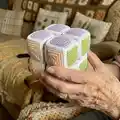
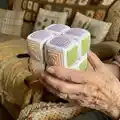
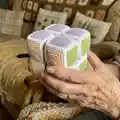
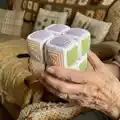
About This Infinity Cube Amigurumi Pattern
This pattern shows you how to crochet an Infinity Cube — a soft, twistable fidget toy made from small crocheted squares joined into cubes. You will make 48 squares in several colors, edge them with white, assemble 8 cubes and sew them together following the included schemes. The finished toy is approximately 10 cm and is written in US crochet terms.
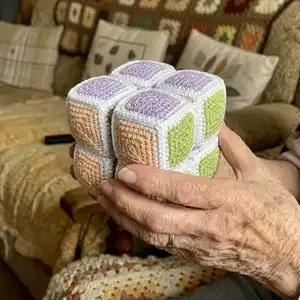
The pattern uses basic stitches (sc, hdc, sl st) with a special inc3 corner increase for tidy corners. Detailed assembly photos and a cube-making scheme are included to guide placement and sewing.
Why You'll Love This Infinity Cube Amigurumi Pattern
I absolutely love this pattern because it turns simple squares into a clever, interactive toy that is both beautiful and functional. I enjoy the satisfying rhythm of making multiple identical squares and then watching them transform into cubes as you join them together. The color combinations let me play with pastels and contrasts, making each finished cube set feel unique. Sewing the cubes into the final Infinity Cube is so rewarding — it becomes a perfectly tactile piece to fidget with or share as a handmade gift.
Switch Things Up
I love customizing color combinations in this pattern: try monochrome shades for a modern look or rainbow pastels for a playful version.
I sometimes swap YarnArt Jeans for a cotton blend to make a slightly firmer cube that steams nicely.
If you want a chunkier cube, use a thicker yarn and a larger hook and adjust stuffing to keep the shape soft but full.
I often embroider small symbols or applique tiny shapes on the center of each square to personalize the toy for a child or as a gift.
You can make mini versions as keychains by using thinner yarn and less stuffing; add a keyring attached discreetly inside a seam.
I like to use baby-safe yarns and skip any small parts if making this for toddlers to ensure it is safe and washable.
Try alternating edging colors instead of white to create a checkerboard effect along the seams for a bolder look.
I sometimes add thin plastic boning or stitched reinforcement in seams if I want the cube to keep a rigid folding action for adult fidget use.
For a sensory version, incorporate different textures of yarn (soft chenille, cotton, and cotton-wool blends) across the 48 squares for tactile variety.
I recommend experimenting with different stuffing amounts to find the best balance between foldability and plushness for your preferred feel.
Common Mistakes & How to Fix Them
✗ Skipping counting stitches at the end of each round can cause uneven squares; count your stitches after every round to ensure you have the correct totals.
✗ Overstuffing the cube faces will deform the cube shape and make assembly difficult; stuff gently and gradually so the shape remains soft and correct.
✗ Not hiding or securing thread tails before assembly causes loose ends to show later; fasten off securely and hide ends inside the square before joining.
✗ Joining squares with inconsistent tension will make seams look uneven and bulky; work single crochet joins with even tension and test on one seam first.
✗ Failing to place inc3 increases exactly in the corners makes the square misshapen; mark corners if needed and ensure inc3 is worked in each corner stitch.
✗ Using a hook size that's too large for the yarn will make the squares floppy and the cube unstable; use the recommended hook or one size smaller for firmer fabric.