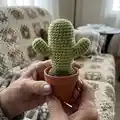
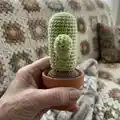
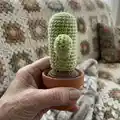
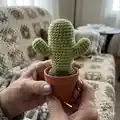
About This Desert Crochet Cactus Amigurumi Pattern
This pattern teaches you how to crochet a small stuffed cactus with a terracotta pot 'soil' base. You will make the soil, the cactus body and optional arms or flowers using DK weight yarn and a 3.5mm hook. The techniques are simple single crochets, increases and decreases, with a flat piece option for a tall cactus variant.
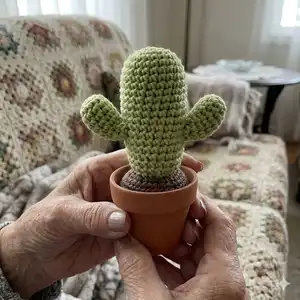
Ideal for beginners, it uses a magic ring, invisible decreases and simple assembly steps. The finished cactus fits neatly inside a small terracotta pot and makes a charming handmade gift.
Why You'll Love This Desert Crochet Cactus Amigurumi Pattern
I absolutely love this pattern because it turns basic crochet stitches into a delightful miniature plant that brightens any space. I enjoy how quickly it works up — you can finish one in an afternoon and still have time to make a friend for it. The design is forgiving and beginner friendly, yet still allows little custom touches like bent arms or tiny flowers. Sewing the pieces together is satisfying and gives a professional, finished look. I also love gifting these — they are small, handmade and always well received.
Switch Things Up
I love how easy it is to customise this cactus — you can change the yarn color to make a whole desert scene in different greens and pastels.
I often make a set of three using varying yarn weights: a bulky yarn with a larger hook creates a chunky statement cactus, while a finer yarn and smaller hook makes tiny keychain-sized cactuses.
I sometimes add a short piece of pipe cleaner inside the arms so I can pose them; place it inside before finishing the stuffing and bend it to the desired shape after sewing.
If you prefer a more textured cactus, try working every few rounds in front loops only to create ridges or use a half double crochet row for larger ribbing effects.
For flowers, switch to bright contrast colours and experiment with multiple layers of petals or tiny French knots using embroidery thread for delicate blooms.
I also change the pot: a painted terracotta pot, a tiny teacup or a shallow bowl will change the display and feel of the finished piece.
To make a family of plants, vary the height and width by adding or subtracting rounds in the body or by changing the number of rows for the tall panel piece.
I sometimes embroider tiny spines or use contrasting yarn to stitch vertical lines for a realistic ribbed cactus look.
If you want a hanging decoration, leave a longer tail and make a small loop to hang it, or attach a keyring to create a cactus keychain.
Finally, I recommend experimenting with mixed fibres for different textures — cotton gives a crisp stitch while acrylic gives a softer, squishier toy for a different tactile finish.
Common Mistakes & How to Fix Them
✗ Skipping stitch markers at the beginning of rounds can cause you to lose the start point; mark the first stitch of each round to keep your rounds even and countable.
✗ Stuffing too early or too much at once will distort shaping; stuff gradually and firmly as directed, especially before closing decreases to maintain the cactus shape.
✗ Not counting stitches after increases and decreases can throw off the pattern; count regularly after each round to ensure you have the correct stitch count.
✗ Forgetting to leave a long tail when fastening off prevents easy sewing; always leave a generous tail at the end of the body and soil pieces for secure assembly.
✗ Working tightly or loosely compared to the recommended gauge changes the finished size; maintain consistent, moderate tension and use the recommended hook for best results.