🧢 Beautiful ✨ Detailed πŸ’ Adorable

Capybara in a tub Amigurumi Pattern

Capybara in a tub Amigurumi Pattern
4.6β˜… Rating
5-7 Hours Time Needed
4.2K Made This
βœ‚οΈ

Intermediate Level

Ideal for those with basic crochet experience, featuring slightly more advanced stitches and techniques to expand your skills.

⏱️

Weekend Treat

Takes 5-7 hours, making it an enjoyable project to finish over a couple of days.

🧸

Cute Companion

An adorable friend to cherish, handcrafted with love to bring comfort and joy for years to come.

About This Capybara in a tub Amigurumi Pattern

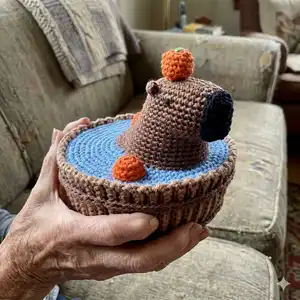
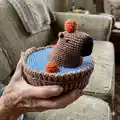
This pattern teaches you to crochet a tiny capybara lounging in a tub with water and little oranges on top. It includes instructions for the head, muzzle, ears, water disk, wooden tub, tub hoops and small oranges. Clear step-by-step rounds, photos and finishing tips are provided so you can assemble everything neatly.

Capybara in a tub Amigurumi Pattern crochet pattern - detailed view of completed project

Works best with thin yarn and a 1.5 mm hook to achieve the small scale described. The finished toy measures about 9 cm (~3 1/2 inches) when using the recommended materials.

Why You'll Love This Capybara in a tub Amigurumi Pattern

I absolutely love this pattern because it turns simple crochet techniques into a tiny, character-filled scene that makes people smile. I enjoy the small-scale shaping β€” it is challenging enough to keep me focused but quick to finish. The tub and water details give the capybara personality and allow for creative color choices. I feel proud when the tiny oranges and ears take shape and bring the little composition to life.

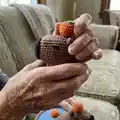
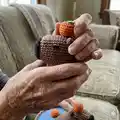
Capybara in a tub Amigurumi Pattern step 1 - construction progress Capybara in a tub Amigurumi Pattern step 2 - assembly progress Capybara in a tub Amigurumi Pattern step 3 - details and accessories Capybara in a tub Amigurumi Pattern step 4 - final assembly and finishing

Switch Things Up

I love how easy it is to customize this little scene; change the tub color to bright tones for a playful look or to neutrals for a classic feel.

I often swap the blue water for teal or mint to match seasonal palettes or gift themes.

Want a larger capybara? Use thicker yarn and a larger hook, remembering to scale the cardboard base accordingly.

If you like minis, try crochet thread and a 1.25 mm hook to make an even tinier version for keychains.

I like to embroider different facial expressions β€” moving the eyes slightly changes the personality dramatically, so experiment before securing features.

Add tiny accessories like a crocheted towel or tiny soap bar to turn the scene into a mini diorama.

I sometimes replace the oranges with little flowers or shells for a seasonal twist or nature-inspired set.

Try stuffing the tub more for a sturdier display piece or less for a softer, huggable toy.

I recommend stitching the cardboard securely and using a hot glue spot to keep it in place if you plan to gift the toy to a child.

For a more durable toy, use cotton yarn instead of synthetic blends β€” it gives a crisp stitch definition and washes well.

Common Mistakes & How to Fix Them

βœ— Crocheting with loose tension creates visible holes and a floppy shape; maintain tight, consistent stitches and switch to a smaller hook if holes appear. βœ— Forgetting to move the marker causes you to lose track of the beginning of the round; place the marker and move it to the next stitch after each round as instructed. βœ— Overstuffing the head or tub makes seams and shapes bulge awkwardly; stuff gradually and evenly, adding small amounts until you reach the desired firmness. βœ— Skipping invisible decreases or miscounting decreases will distort shaping; count your stitches after each decrease round and use stitch markers to mark sections when needed. βœ— Not finishing details with slip stitch or hiding ends neatly results in untidy edges; finish details with slip stitch and weave or hide ends carefully before final assembly.

Capybara in a tub Amigurumi Pattern

Create a tiny capybara relaxing in a tub with this friendly crochet pattern. You will make a cozy wooden tub, a water disk, a cute capybara head and muzzle, tiny oranges and decorative hoops. The pattern includes step-by-step rounds, photos and assembly notes so you can finish a charming handmade toy for gifting or display. Perfect for makers who enjoy small, detailed amigurumi projects.

Intermediate 5-7 Hours

Materials Needed for Capybara in a tub Amigurumi Pattern

β€” Main Fabric

  • 01
    YarnArt Begonia (169 m / 50 g) - Brown (main body) - amount: small skeins as needed
  • 02
    YarnArt Begonia (169 m / 50 g) - Orange - small amount for oranges and halves
  • 03
    YarnArt Begonia (169 m / 50 g) - Beige - small amount for wooden tub detail
  • 04
    YarnArt Begonia (169 m / 50 g) - Blue - small amount for water disk
  • 05
    YarnArt Begonia (169 m / 50 g) - Black - small amount for muzzle
  • 06
    Green yarn - small scrap for embroidering orange leaf

β€” Tools Required

  • 01
    Crochet hook size 1.5 mm
  • 02
    Scissors
  • 03
    Yarn needle for sewing
  • 04
    Stuffing material (polyester fiberfill)
  • 05
    Needle (for embroidering leaf and sewing)
  • 06
    Piece of cardboard (for tub bottom)
  • 07
    Stitch markers or a colored pin to mark the beginning of rounds

Progress Tracker

0% Complete

β€” Head :

Info :

Brown color, hook 1,5 mm.

Round 1 :

8 ch st, inc in the second stitch from the hook in the back loop (photo 1, 2), in the back loops of the chain: 5sc, 4sc in the last loop of the chain, keep crocheting on the other side of the chain (photo 3): 5sc, inc (photo 4) (18)

Round 2 :

(incx2, 5sc, incx2)x2 (26)

Round 3 :

(1sc, incx2, 7sc, incx2, 1sc)x2 (34)

Round 4 :

34sc (34)

Round 5 :

2sc, inc, 28sc, inc, 2sc (36)

Round 6-8 :

36sc (36)

Round 9 :

2sc, incx2, 28sc, incx2, 2sc (40)

Round 10 :

40sc (40)

Round 11 :

16sc, invdecx4, 16sc (36)

Round 12 :

1sc, inc, 14sc, invdecx2, 14sc, inc, 1sc (36)

Round 13 :

3sc, inc, 12sc, invdecx2, 12sc, inc, 3sc (36)

Round 14 :

4ch st, inc in the second stitch from the hook in the back loop, in the back loops of the chain: 2sc, keep crocheting on the body: 2sc, inc, 30sc, inc, 2sc, on the other side of the chain: 2sc, inc (46)

Info :

Move the marker thread in the next stitch from the hook.

Round 15 :

inc, 3sc, invdec, 34sc, invdec, 3sc, inc (46)

Round 16 :

incx2, 2sc, invdecx2, 30sc, invdecx2, 2sc, incx2 (46)

Round 17 :

(1sc, inc)x2, 2sc, invdec, 30sc, invdec, 2sc, (inc, 1sc)x2 (48)

Round 18 :

2sc, inc, 42sc, inc, 2sc

Round 19 :

1sl st

Info :

Fasten off and cut the yarn, leave a long end for sewing.

β€” Muzzle :

Info :

Black color, hook 1,5 mm.

Round 1 :

6ch st, inc in the second stitch from the hook in the back loop, in the back loops of the chain: 3sc, in the last loop of the chain: incX2, on the other side of the chain: (3sc, inc) (14)

Round 2 :

(1sc, inc, 3sc, inc, 1sc)x2 (18)

Round 3 :

1sl st, inc, 5hdc, inc, 2sc, inc, 5hdc, inc, 1sl st (22)

Info :

Fasten off and cut the yarn, leave a long end for sewing.

β€” Ears :

Info :

Attach the thread between 4th and 5th rows as shown in the photo.

Round 1 :

Then in one stitch make: 1ch st, 1hdc, 1ch st, 1sl st

Info :

Fasten off and cut the yarn, hide the end of the yarn. The second ear make in the same way.

β€” Water :

Info :

Blue yarn, hook 1,5 mm.

Round 1 :

6sc in MR (6)

Round 2 :

incx6 (12)

Round 3-6 :

(1sc, inc)x6 (18) / 12sc (12) as printed: 3-6rows: 12sc (12)

Round 4 :

(1sc, inc, 1sc)x6 (24)

Round 5 :

(3sc, inc)x6 (30)

Round 6 :

(2sc, inc, 2sc)x6 (36)

Round 7 :

(5sc, inc)x6 (42)

Round 8 :

(3sc, inc, 3sc)x6 (48)

Round 9 :

(7sc, inc)x6 (54)

Round 10 :

(4sc, inc, 4sc)x6 (60)

Round 11 :

(9sc, inc)x6 (66)

Round 12 :

(5sc, inc, 5sc)x6 (72)

Round 13 :

(11sc, inc)x6 (78)

Round 14 :

(6sc, inc, 6sc)x6 (84)

Round 15 :

(13sc, inc)x6 (90)

Round 16 :

(7sc, inc, 7sc)x6 (96)

Info :

Fasten off and cut the yarn, leave a long end for sewing.

β€” Wooden tub :

Info :

Beige yarn, hook 1,5 mm.

Round 1 :

15ch st, 1sc in the second stitch from the hook, 13sc (4)

Round 2-90 :

(in back loops only) 1ch st, turn, 14sc (14)

Round 91 :

(work on the long side of the detail) 1ch st, (4sc, invdec, 4sc)x9, 1sl st in the beginning of the row

Round 92 :

Keep crocheting in round to create the bottom part of the tub (in back loops only) (7sc, invdec)x9 (72)

Round 93 :

(3sc, invdec, 3sc)x9 (63)

Round 94 :

(5sc, invdec)x9 (54)

Round 95 :

(7sc, invdec)x6 (48)

Round 96 :

(3sc, invdec, 3sc)x6 (42)

Round 97 :

(5sc, invdec)x6 (36)

Round 98 :

(2sc, invdec, 2sc)x6 (30)

Round 99 :

(4sc, invdec, 4sc)x3 (27)

Round 100 :

(7sc, invdec)x3 (24)

Round 101 :

(1sc, invdec, 1sc)x6 (18)

Round 102 :

invdecx9 (9)

Info :

Pull the hole closed. Fasten off and cut the yarn, hide end of the yarn. Sew the open sides of the tub.

Info :

Cut a circle out of the cardboard. Diameter of the circle should be a bit smaller than bottom part. Glue it to the wrong side of the detail.

β€” Tub hoops :

Info :

Brown yarn, hook 1,5 mm.

Item Name (Upper hoop) :

1row: 2ch st, 1sc in the second stitch from the hook

Round 2-103 :

1sc in the bottom part of the sc of the previous row: insert hook into the bottom part of the previous sc (photo 1), yarn over and pull up a loop (two loops on the hook) (photo 2). Yarn over and pull through two loops to finish off the single crochet (photo 3). Fasten off and cut the yarn, leave a long end for sewing.

Item Name (Bottom hoop) :

1row: 2ch st, 1sc in the second stitch from the hook. 2-92rows: 1sc in the bottom part of the sc of the previous row. Fasten off and cut the yarn, leave a long end for sewing.

β€” Orange :

Info :

Orange color, hook 1,5 mm.

Round 1 :

6sc in MR (6)

Round 2 :

incx6 (12)

Round 3-6 :

12sc (12)

Info :

Stuff the orange with stuffing material.

Round 7 :

invdecx6 (6)

Info :

Fasten off and cut the yarn, leave a long end for sewing. Embroider leaf on the orange with green yarn.

β€” Orange halves :

Info :

Orange yarn, hook 1,5 mm.

Item Name (Bigger half - 2 pcs) :

1row: 6sc in MR (6)

Round 2 :

incx6 (12)

Round 3 :

12sc (12)

Info :

Fasten off and cut the yarn, leave a long end for sewing. Embroider leaf on one of the orange halves with green yarn.

Item Name (Smaller half - 1 pc) :

1row: 6sc in MR (6)

Round 2 :

(1sc, inc)x3 (9)

Round 3 :

9sc (9)

Info :

Fasten off and cut the yarn, leave a long end for sewing.

β€” Assembly :

Info :

With black yarn make eyes a French knot stitch between 5th and 6th rows. The distance from the ear is 3 sc. With brown yarn make eyelids above eyes. Stuff the capybara with stuffing material. Sew the muzzle to the head.

Info :

Cut a circle out of the cardboard. Diameter of the circle should be a bit smaller than detail. Glue it to the wrong side of the detail.

Info :

Sew the capybara to the water detail as shown in the photo. Add stuffing material if needed.

Info :

Sew the orange to the head. Stuff orange halves with stuffing material and sew them near the capybara as shown in the photo.

Info :

Stuff the tub with stuffing material and sew the water detail to the tub. Edge of the water is below the edge of the tub.

Info :

Sew hoops to the tub.

Info :

Congratulations! Your capybara is ready!

Assembly Instructions

  • With black yarn make eyes as French knot stitches between 5th and 6th rows; the distance from the ear should be 3 sc. With brown yarn embroider the eyelids above the eyes and stuff the capybara before sewing the muzzle in place.
  • Cut a cardboard circle slightly smaller than the tub bottom and glue it to the wrong side of the water detail to add structure, then sew the water detail to the tub with the water edge placed below the top edge of the tub.
  • Sew the capybara onto the water disk in the position shown in the photos, adding stuffing material inside the tub as needed to keep the capybara stable and shaped.
  • Sew the small oranges and orange halves to the head and around the water as shown, stuffing halves lightly and hiding all yarn ends securely before final placement.
  • Attach and sew the upper and bottom tub hoops to the outside of the tub, aligning ribs evenly and checking symmetry as you work.

Important Notes

  • πŸ’‘Crochet with tight stitches to avoid holes; if you notice tiny holes, try a smaller hook for a tighter gauge.
  • πŸ’‘Most details are crocheted in a spiral without slip stitch to avoid seams; use a marker to mark the beginning of the round.
  • πŸ’‘Finish small details with slip stitch to maintain tidy edges and weave in ends as you go for a clean finish.
  • πŸ’‘Stuff parts gradually and evenly to maintain shape; overstuffing can distort the toy and under-stuffing causes limp sections.

This tiny Capybara in a tub is a delightful miniature scene that makes a perfect gift or shelf companion. Handcrafted details like embroidered leaves and tiny oranges give it a lot of charm and personality. Make it in different colors or scales to create a whole collection of playful tub-dwelling friends. 🧢🧑

You ask,

we answer.

FAQs

What size will the finished piece be?

The finished amigurumi measures approximately 9 cm (~3 1/2 inches) when using the recommended thin yarn and 1.5 mm hook.

Can I use a different yarn weight for this pattern?

Yes, but using a thicker yarn and larger hook will increase the final size and may require adjusting stuffing and cardboard size; for the pattern proportions, stick to thin yarn like YarnArt Begonia and a 1.5 mm hook.

Do I need to crochet in a spiral or join rounds?

Most details in this pattern are crocheted in a spiral without slip stitch to avoid seams; use a marker to track the beginning of each round.

How long does this project typically take to complete?

Most crocheters finish this project in about 5-7 hours, depending on experience, attention to detail, and assembly time.