🧢 Beautiful ✨ Detailed πŸ’ Adorable

The Boho Book Nook Pattern

The Boho Book Nook Pattern
4.7β˜… Rating
2-4 Hours Time Needed
2.7K Made This
βœ‚οΈ

Beginner Friendly Level

Perfect for those just starting their crochet journey, with clear instructions and simple techniques

⏱️

Bite-Sized Project

Finishes in 2-4 hoursβ€”perfect for an afternoon of creative relaxation.

🏑

Cozy Accent

A warm touch for your space that transforms ordinary corners into inviting nooks filled with handmade charm.

About This The Boho Book Nook Pattern

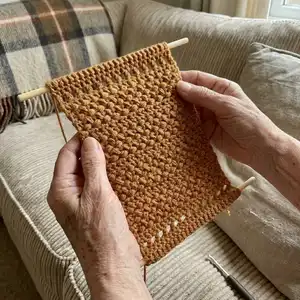
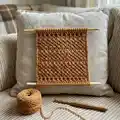
This pattern creates a boho-style hanging book nook β€” a woven pocket that holds a paperback or small items. It is crocheted with two strands held together and finished by forming beginning and end tubes that slide onto dowel rods. The design features mini bean stitch rows and alternating sc/dc texture panels for a handmade rustic look.

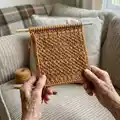
The Boho Book Nook Pattern crochet pattern - detailed view of completed project

You will make one pocket piece and two tube-like arms, then slide them onto two dowel rods for hanging. Instructions include gauge, stitch notes, and photo-referenced construction tips for easy assembly.

Why You'll Love This The Boho Book Nook Pattern

I absolutely love this pattern because it transforms simple stitches into a functional and decorative wall pocket you can use every day. I enjoy how the two-strand fabric gives the piece structure while still feeling soft and tactile. The mini bean stitch adds a charming textured band that makes the pocket feel handcrafted and unique. Working the beginning and end tube method is satisfying and gives a neat, hidden seam when assembled. I also love that you can easily customize the size or color to match your home decor.

The Boho Book Nook Pattern step 1 - construction progress The Boho Book Nook Pattern step 2 - assembly progress The Boho Book Nook Pattern step 3 - details and accessories The Boho Book Nook Pattern step 4 - final assembly and finishing

Switch Things Up

I love how easy it is to customize this pattern by changing colors β€” try two contrasting colors held together for a striped effect.

I sometimes switch yarn to a soft bulky cotton and increase hook size for a chunkier, more sculptural pocket.

I also enjoy making the pocket deeper by adding extra single crochet rows before creating the beginning tube; count carefully to maintain even or odd row considerations.

If you want a smaller pocket, use lighter weight yarn and a smaller hook to create a daintier hanging shelf for postcards or small notes.

I like to add a decorative fringe along the bottom edge for boho flair β€” simply attach lengths of yarn and knot them securely.

For a more finished look, I sometimes embroider a small motif on the front panel using contrasting yarn and simple surface stitches.

I also recommend swapping the dowel rods for wooden curtain rods or painted branches for a more natural or personalized style.

To make a set, I create multiple pockets in coordinating colors and hang them at staggered heights along a wall for a gallery-like storage solution.

Want a more secure shelf? I occasionally add a thin strip of interfacing or lightweight plastic between two rows while assembling to support heavier books.

I love adding little crocheted pockets or hanging tags to the arms for extra storage or personalization β€” they are great for gifts with a name tag or small pocket for a note.

Common Mistakes & How to Fix Them

βœ— Not checking your gauge before starting can make the pocket too wide or too narrow; work a small swatch holding two strands together and measure 5 inches to match the pattern gauge. βœ— Skipping the note about odd versus even rows causes seams to end up on the outside; mark whether you used an odd or even number of rows and follow the front-loop/back-loop instruction accordingly. βœ— Failing to test the piece around your dowel rod will result in a pocket that wont slide on; always check fit before completing the beginning tube and add or subtract rows if necessary. βœ— Overtightening tension when holding two strands together creates a stiff fabric that warps with weight; relax your tension slightly and use the recommended hook to maintain drape. βœ— Forgetting to use the unused loops when creating the end tube will leave raw edges; use the unused loops from the earlier row (row 35 or row 19 for arms) to slip stitch and form the end tube securely.

The Boho Book Nook Pattern

Create a stylish boho hanging book pocket to keep a favorite book or small items within easy reach. This pattern uses two-strand crochet and simple stitch textures to form a sturdy tube-pocket that slides onto dowel rods. Youll enjoy quick shaping, a tactile mini-bean stitch detail, and an easy assembly process to make a beautiful wall basket.

Beginner Friendly 2-4 Hours

Materials Needed for The Boho Book Nook Pattern

β€” Main Fabric

  • 01
    Worsted weight yarn (#4), approximately 350 yards total
  • 02
    I Love This Cotton in Antique Gold - 2 skeins used for pictured sample
  • 03
    Work with two strands held together throughout main pieces

β€” Tools Required

  • 01
    Crochet hook size 6.0 mm (US J/10) or hook needed to match gauge
  • 02
    Yarn needle
  • 03
    Scissors
  • 04
    2 dowel rods, 12-inch by 5/16-inch
  • 05
    12-inch pieces of yarn for tying dowel rod ends (or similar cord) for hanging

Progress Tracker

0% Complete

β€” General :

Info :

Level: Advanced Beginner

Info :

Finished Size: Approx. 12 inches wide and 11 inches long after completion, not including hanging string.

Infos :

Supplies: Yarn needle. Scissors. 2 12-inch by 5/16-inch dowel rods. 6mm crochet hook or hook needed to match gauge. Approximately 350yds of worsted weight (4) yarn. 2 skeins of I Love This Cotton in Antique Gold were used for the hanging basket pictured.

Infos :

Stitches and abbreviations: Ch (chain). Sk (skip). St (stitch/stitches). Sl st (slip stitch). Sp (space). Blo (back loop only). Sc (single crochet). Fsc (foundation single crochet). Dc (double crochet). Mini Bean stitch (bean). See bean stitch description in abbreviations.

Info :

Gauge: 5 1/2 stitches and 6 rows with two strands held together in sc equals 2-inch square.

β€” Pattern - Pocket :

Info :

With two strands held together

Row 1 :

Fsc 25 (alternatively, ch 26, sc in second ch and across). (25 sc)

Row 2 :

Ch 1 and turn. Sc in same st and each st across. Piece should measure 9 inches long. (25 sc)

Row 3-5 :

Ch 1 and turn. Sc in same st and each st across. (25 sc)

Info :

*At this point, check that the piece will fit around your dowel rod (photo 1). If it is still short, add or subtract sc rows as needed, but make note of whether you need an even or odd number of rows for later.*

Row 6 :

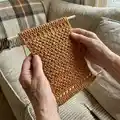
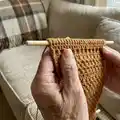
Ch 1 and turn. Sc through both loops of row 5 and bottom loops of row 1 to create a tube (photos 2 and 3). This is the beginning tube. (25 sc)

Row 7 :

Ch 4 (counts as dc + ch 1) and turn. Sk same st and next st, dc in next st, *ch 1, sk 1, dc in next st* to end. (13 dc, 12 ch 1 sp)

Row 8 :

Ch 1 and turn. Sc in same st, sc in each st and ch sp across, sc in 3rd ch of ch 4 from previous row. (25 sc)

Row 9 :

Ch 1 and turn. Sc in same st, ch 1, sk 1, mini bean in next st, *sk 1 st, mini bean in next st* across until there are 2 stitches left, sk 1 st, sc in last st. (2 sc, 11 beans)

Row 10-13 :

Repeat row 9. (2 sc, 11 beans)

Row 14 :

Ch 3 (counts as dc) and turn. Sk same st, dc in next st and each st across. (25 dc)

Row 15 :

Ch 1 and turn. Sc in same st, ch 1, sk 1, mini bean in next st, *sk 1 st, mini bean in next st* across until there are 2 stitches left, sk 1 st, sc in ch 3 from previous row. (2 sc, 11 beans)

Row 16-19 :

Repeat row 9. (2 sc, 11 beans)

Row 20 :

Repeat row 14. (25 dc)

Row 21 :

Repeat row 15. (2 sc, 11 beans)

Row 22-25 :

Repeat row 9. (2 sc, 11 beans)

Row 26 :

Repeat row 14. (25 dc)

Row 27 :

Repeat row 15. (2 sc, 11 beans)

Row 28-31 :

Repeat row 9. (2 sc, 11 beans)

Row 32 :

Repeat row 14. (25 dc)

Row 33 :

Ch 4 (counts as dc + ch 1) and turn. Sk same st and next st, dc in next st, *ch 1, sk 1, dc in next st* to end. (13 dc, 12 ch 1 sp)

Row 34 :

Ch 1 and turn. Sc in same st, sc in each st and ch sp across, sc in 3rd ch of ch 4 from previous row. (25 sc)

Info :

*If you used an odd number of rows to fit around your dowel rod, continue with the pattern as written. If you used an even number of rows, work row 35 in the front loops only instead of the back loops. This will keep your unused loops on the correct side for seaming.*

Row 35 :

Ch 1 and turn. Sc in same st in blo, sc in each st across in blo (you will be using the unused loops for row 40). (25 sc)

Row 36-39 :

Ch 1 and turn. Sc in same st and across. (25 sc)

Info :

*If you needed more or fewer rows for the beginning tube, do the same thing here for the end tube.*

Row 40 :

Using the unused loops from row 35, sl st through both loops of row 39 and the loops from row 35 across to create the end tube (photos 4 and 5). Tie off. Weave in all ends.

β€” Arms :

Info :

Arms (make two): With two strands held together

Row 1 :

Ch 3, sc in second ch and last ch. (2 sc)

Row 2-5 :

Ch 1 and turn. Sc in same st and last st. (2 sc)

Info :

*If you needed more or fewer rows for the beginning tube on the pocket, do the same thing here for both arms, but again, make note of whether you need an even or odd number of rows for later.*

Row 6 :

Ch 1 and turn. Sc through both loops of row 5 and bottom loops of row 1 to create a tube (photos 2 and 3). This is the beginning tube. (2 sc)

Row 7-18 :

Ch 1 and turn. Sc in same st and last st. (2 sc)

Info :

*If you used an odd number of rows to fit around your dowel rod, continue with the pattern as written. If you used an even number of rows, work row 19 in the front loops only instead of the back loops. This will keep your unused loops on the correct side for seaming.*

Row 19 :

Ch 1 and turn. Sc in same st in blo, sc in last st in blo (you will be using the unused loops for row 24). (2 sc)

Row 20-23 :

Ch 1 and turn. Sc in same st and last st. (2 sc)

Info :

*If you needed more or fewer rows for the beginning tube, do the same thing here for the end tube.*

Row 24 :

Using the unused loops from row 19, sl st through both loops of row 23 and the loops from row 19 across to create the end tube (photos 4 and 5). Tie off. Weave in all ends.

β€” Construction :

Info :

Beginning tube (this process is the same for the pocket and the arms)

Info :

Photo 1: Check if your piece fits around your dowel rod.

Info :

Photo 2: Sc the ends together to create a tube. *you do not have to do this around the dowel rod, but I found it helpful to show in the photos for clarification*

Info :

Photo 3: Finished beginning tube!

Info :

End tube (this process is the same for the pocket and the arms)

Info :

Photo 4: Sl st in both loops of last row and unused loops from row 35 (or row 19 for the arms) across to create another tube.

Info :

Photo 5: Finished end tube!

Info :

Final construction:

Info :

Photo 6: Slip the beginning tube of the pocket onto the first dowel rod, and the end tube on the bottom dowel rod with the sl st seam facing you. This way, when you fold the pocket up, the seam will be hidden on the inside of the pocket.

Info :

Photo 7: For both arms, slip the beginning tube onto the end of the top dowel rod, twist a couple of times leaving the sl st seam facing in, and fold the pocket up to meet the arms.

Info :

Photo 8: Slip the bottom tube onto bottom dowel rod. Tie 12-inch piece of yarn to each end of your dowel rod as desired for hanging.

Info :

Photo 9: and the hanging wall basket done!

Assembly Instructions

  • Slide the beginning tube of the pocket onto the top dowel rod, then slide the end tube onto the bottom dowel rod so the sl st seam faces inward; fold the pocket up so the seam is hidden on the inside.
  • For each arm (make two), slip the beginning tube onto the end of the top dowel rod, twist the arm tube a couple of times with the sl st seam facing inward, and fold the pocket to meet the arms.
  • Slide the bottom tube of the pocket onto the bottom dowel rod so both dowels hold the folded pocket in place and create the shelf pocket.
  • Tie a 12-inch piece of yarn or cord to each end of the top dowel rod (and bottom if desired) to create the hanging loop and secure for hanging.
  • Weave in all ends and trim excess fibers; check that the pocket fits the dowel rods and that seams are neat before hanging on the wall.

Important Notes

  • πŸ’‘Work with two strands held together throughout the pattern to achieve the correct thickness and gauge for the pocket.
  • πŸ’‘Check that the fabric fits around your dowel rod before creating the beginning tube; add or subtract rows if needed for a proper fit.
  • πŸ’‘If you used an even number of rows to fit around the dowel, work the specified seam-row in the front loops only so unused loops are on the correct side for seaming.

This Boho Book Nook makes a beautiful, functional accent for any wall and holds a favorite paperback or small items with rustic charm. Perfect for gifting or adding a cozy handmade touch to your reading corner. Happy crocheting and enjoy styling your new hanging basket! 🧢🏑

You ask,

we answer.

FAQs

What size will the finished piece be?

The finished hanging pocket measures approximately 12 inches wide and 11 inches long after completion, not including the hanging string, when made to gauge with two strands held together.

Can I use different yarn weights for this pattern?

Yes, but changing yarn weight will affect the final size and drape; if using a different weight, adjust your hook and check gauge so the pocket fits your dowel rods.

Do I need prior crochet experience for this pattern?

This pattern is rated beginner friendly (advanced beginner); basic skills like single crochet, double crochet, chains, and working in front or back loops are recommended.

How long does this project typically take to complete?

This project generally finishes in 2-4 hours, depending on experience, customization, and whether you need to adjust rows to fit your dowel rods.

How do I make sure the pocket fits my dowel rods?

Work a few initial rows, then wrap the piece around your dowel rod to check fit; add or subtract single crochet rows as needed and note whether you used an even or odd number of rows for later seaming.