🧢 Beautiful ✨ Detailed πŸ’ Adorable

Pearodactyl Amigurumi Pattern

Pearodactyl Amigurumi Pattern
4.0β˜… Rating
5-7 Hours Time Needed
2.0K Made This
βœ‚οΈ

Intermediate Level

Ideal for those with basic crochet experience, featuring slightly more advanced stitches and techniques to expand your skills.

⏱️

Weekend Treat

Takes 5-7 hours, making it an enjoyable project to finish over a couple of days.

🧸

Cute Companion

An adorable friend to cherish, handcrafted with love to bring comfort and joy for years to come.

About This Pearodactyl Amigurumi Pattern

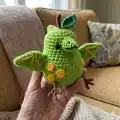
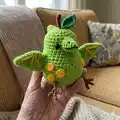
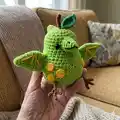
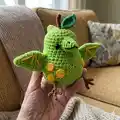
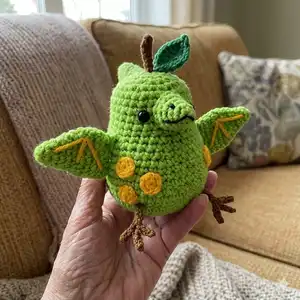
This pattern creates a whimsical pear-shaped creature called the Pearodactyl, complete with wings, a crest, a beak and decorative spots. You will learn shaping, invisible decreases and small-piece assembly as you go. The design is worked in DK-weight yarn and finishes at approximately 11cm tall.

Pearodactyl Amigurumi Pattern crochet pattern - detailed view of completed project

Clear round-by-round instructions are included for every part, plus photos and finishing notes to guide assembly. Ideal for gifting or keeping as a cheerful handmade ornament.

Why You'll Love This Pearodactyl Amigurumi Pattern

I absolutely love this pattern because it blends playful character design with simple techniques that give great results. I enjoy how the small details β€” the leaf stem and embroidered spots β€” add so much personality to the piece. Sewing the parts together is satisfying and the finished amigurumi is compact and gift-ready. I also appreciate that the pattern teaches invisible decreases and neat finishing that will improve your overall amigurumi skills.

Pearodactyl Amigurumi Pattern step 1 - construction progress Pearodactyl Amigurumi Pattern step 2 - assembly progress Pearodactyl Amigurumi Pattern step 3 - details and accessories Pearodactyl Amigurumi Pattern step 4 - final assembly and finishing

Switch Things Up

I love to experiment with colourways for this design; swap the greens for pastels to make a whimsical baby-friendly version.

To make a larger Pearodactyl, use bulkier yarn and a bigger hook β€” this will give you a chunky, huggable toy.

For a tiny keychain version, use finer yarn and a smaller hook; remember to use secure attachments for safety eyes or embroider the eyes instead.

I often change the spot colour and size to give each pear a different personality; try contrasting spots or gradient embroidery.

Try using safety eyes of different sizes or embroider the face for a softer, child-safe option; black embroidery floss works well for nostrils and a smile.

If you want posable limbs, insert a thin wire into the legs before stuffing, but ensure ends are well wrapped and secured to avoid poking out.

Embellish with tiny crocheted accessories β€” a scarf or hat β€” to create seasonal or themed characters for gifts.

Change the texture by working the wings or crest in BLO or FLO to create ridges and more defined shapes.

For a holiday look, work the spots in metallic yarn or add small sewn-on beads for sparkle, keeping them securely attached.

I also enjoy mixing yarn fibers β€” a slightly fuzzier yarn for the body with smooth yarn for details creates a lovely tactile contrast.

Don’t be afraid to adjust placement of eyes and spots before stitching; small changes dramatically alter expression and character.

Common Mistakes & How to Fix Them

βœ— Skipping the placement of safety eyes at the recommended rounds causes uneven facial placement; insert safety eyes between rnds 24 - 25 five visible sts apart to match the pattern. βœ— Not stuffing gradually results in an overfilled or misshapen body; start adding stuffing at rnd 22 and continue to stuff as you decrease so shaping stays correct. βœ— Using a hook that is too large with DK yarn makes stitches loose and details sloppy; use the recommended 2.5 mm hook for a firm fabric and neat detailing. βœ— Failing to leave long tails when fastening off small parts prevents easy sewing; always cut yarn leaving a long tail on pieces like crest, beak and spots to attach them cleanly. βœ— Pulling decreases too tightly when using invisible decrease can distort your round edges; practice the invisible decrease and keep moderate tension for seamless shaping.

Pearodactyl Amigurumi Pattern

Create a playful Pearodactyl β€” a cute pear-shaped amigurumi with tiny wings, spots and a leafy stem. This pattern walks you through every piece step-by-step so you can sew and finish with confidence. With full assembly notes and helpful techniques, you can make a charming 11cm tall collectible or gift.

Intermediate 5-7 Hours

Materials Needed for Pearodactyl Amigurumi Pattern

β€” Main Fabric

  • 01
    Stylecraft Special DK yarn (DK / Light weight) in Kelly Green
  • 02
    Stylecraft Special DK yarn (DK / Light weight) in Grass Green
  • 03
    Stylecraft Special DK yarn (DK / Light weight) in Sunshine
  • 04
    Stylecraft Special DK yarn (DK / Light weight) in Gingerbread

β€” Tools Required

  • 01
    Crochet hook size 2.5 mm
  • 02
    Two 6 mm safety eyes
  • 03
    Stitch markers
  • 04
    Yarn needle
  • 05
    Fibrefill (polyester stuffing)
  • 06
    Black embroidery thread/floss
  • 07
    Scissors
  • 08
    Pins for positioning parts (optional)

Progress Tracker

0% Complete

β€” Techniques :

Info :

How to close amigurumi invisibly: 1. Insert needle in the FLO of each stitch around 2. Pull tight to close 3. Insert needle through centre exiting a few rounds down 4. Weave in the end and admire your work!

Info :

How to decrease invisibly: 1. Insert hook into FLO of first stitch 2. Insert hook into FLO of next stitch 3. Yarn over and pull through two loops 4. Yarn over and pull through two loops again. Invisible decrease complete!

Info :

How to fold and stitch together: 1. Fold piece in half, insert hook through next stitch and corresponding stitch on the other side 2. Yarn over and pull through both stitches 3. Complete sc as normal and repeat for all stitches 4. Finished piece folded and stitched together!

β€” Body :

Info :

Using Grass Green

Round 1 :

6sc in MR (6)

Round 2 :

inc each st around (12)

Round 3 :

*1sc, inc* rep 6 times (18)

Round 4 :

*2sc, inc* rep 6 times (24)

Round 5 :

*3sc, inc* rep 6 times (30)

Round 6 :

*4sc, inc* rep 6 times (36)

Round 7 :

*5sc, inc* rep 6 times (42)

Round 8 :

*6sc, inc* rep 6 times (48)

Round 9 - 16 :

sc each st around (48) (8 rnds)

Round 17 :

*6sc, dec* rep 6 times (42)

Round 18 :

sc each st around (42)

Round 19 :

*5sc, dec* rep 6 times (36)

Round 20 :

sc each st around (36)

Round 21 :

*4sc, dec* rep 6 times (30)

Round 22 - 27 :

sc each st around (30) (6 rnds)

Info :

Insert safety eyes between rnds 24 - 25 five visible sts apart.

Info :

Start adding stuffing and continue to stuff as we decrease.

Round 28 :

*3sc, dec* rep 6 times (24)

Round 29 :

*2sc, dec* rep 6 times (18)

Round 30 :

*1sc, dec* rep 6 times (12)

Round 31 :

dec 6 times (6)

Info :

Fasten off and leave a long tail. Complete invisible close. Weave in ends. (photo 1)

β€” Wings (make two) :

Info :

Using Grass Green

Round 1 :

6sc in MR (6)

Round 2 :

sc each st around (6)

Round 3 :

*sc, inc* rep 3 times (9)

Round 4 :

sc each st around (9)

Round 5 :

*2sc, inc* rep 3 times (12)

Round 6 :

sc each st around (12)

Round 7 :

*3sc, inc* rep 3 times (15)

Round 8 :

sc each st around (15)

Round 9 :

dec, 5sc, inc, 5sc, dec (14)

Round 10 :

dec, 4sc, 2inc, 4sc, dec (14)

Info :

Fold and stitch together. Cut yarn leaving a long tail.

Info :

Using sunshine make three long sts on each wing making sure they are only visible on the front (photo 2)

β€” Crest :

Info :

Using Grass Green

Round 1 :

6sc in MR (6)

Round 2 :

*sc, inc* rep 3 times (9)

Round 3 :

sc each st around (9)

Round 4 :

*2sc, inc* rep 3 times (12)

Round 5 :

sc each st around (12)

Round 6 :

5sc, 2inc, 5sc (14)

Round 7 :

sc each st around (14)

Info :

Cut yarn leaving a long tail.

β€” Beak :

Info :

Using Grass Green

Round 1 :

6sc in MR (6)

Round 2 :

*sc, inc* rep 3 times (9)

Round 3 :

sc each st around (9)

Round 4 :

3sc, 3inc, 3sc (12)

Round 5 :

5sc, 2inc, 5sc (14)

Info :

Cut yarn leaving a long tail.

Info :

Using black embroidery floss, stitch two nostrils and a mouth to the beak. Crest and beak shown in (photo 3)

β€” Legs (make two) :

Info :

Using Gingerbread

Round 1 :

Ch8, *slst in 2nd ch from hook, 2slst, ch4* rep 2 times. Slst in 2nd ch from hook, 2slst, now working back up the original ch, 4slst.

Info :

Cut yarn leaving a long tail (photo 4)

β€” Stem :

Info :

Using Gingerbread

Round 1 :

Ch7, slst in 2nd ch from hook, 5slst (6)

β€” Leaf :

Info :

Using Kelly Green

Round 1 :

ch10, sc in 2nd ch from hook, 2hdc, dc, dcinc, dc, 2hdc, work the following sts in the final st (sc, ch2, slst in 2nd ch from hook, sc)

Round 2 :

Now working down the other side of the ch, 2hdc, dc, dcinc, dc, 2hdc, sc, slst to join (20)

Info :

Cut yarn leaving a long tail. Stem and leaf shown in (photo 5)

β€” Spots (make five) :

Info :

Using Sunshine

Round 1 :

6sc in MR, slst to join

Info :

Cut yarn leaving a long tail (photo 6)

β€” Assembly :

Info :

We will use the long tails to attach everything to the body.

Item :

Lightly stuff the beak then sew between the eyes over rnds 23 - 27 (photo 7)

Item :

Lightly stuff the crest then sew to the back of the head directly opposite the beak over rnds 26 - 30 (photo 7)

Item :

Attach the stem and leaf to the centre/top of head (photo 8)

Item :

Join the wings either side of the body over rnds 15 - 21 (photo 9)

Item :

Attach the legs between rnds 11 - 12 approx 10 sts apart (photo 9)

Item :

Finally, sew the spots to the sides near each wing, three on one side, two on the other (photos 10 and 11)

Assembly Instructions

  • Lightly stuff the beak then sew it between the eyes over rounds 23 - 27 using the long tail to secure it in place.
  • Lightly stuff the crest then sew it to the back of the head directly opposite the beak over rounds 26 - 30, aligning the centre.
  • Attach the stem and leaf to the centre/top of the head using the long tails and secure with hidden stitches.
  • Join each wing to either side of the body over rounds 15 - 21, folding and stitching the wing base firmly.
  • Attach the legs between rounds 11 - 12, spacing them approximately 10 stitches apart and sewing securely for stability.
  • Sew the five spots to the sides near each wingβ€”three on one side and two on the otherβ€”using the long tails to stitch them down.

Important Notes

  • πŸ’‘Use stitch markers to keep track of your rounds and to mark the start of each round for consistent shaping.
  • πŸ’‘Stuff gradually and shape as you go; overstuffing early can distort the pear shape during decreases.
  • πŸ’‘Leave long tails when cutting yarn on small parts so you can attach pieces without adding extra ends later.
  • πŸ’‘Insert safety eyes before closing the head completely and ensure they are five visible stitches apart as directed.

This charming Pearodactyl brings a playful twist to amigurumi with pear-shaped charm and tiny wings. 🧢 Perfect for gifting or brightening a shelf, it stitches up quickly with clear instructions. 🍐 Add little custom colours or expressions to make each one uniquely yours. ✨
You ask,

we answer.

FAQs

What size will the finished piece be?

The finished amigurumi measures approximately 11 cm tall when using the recommended Stylecraft Special DK yarn and a 2.5 mm hook.

Can I use different yarn weights for this pattern?

Yes, you can use different yarn weights but this will affect the final size; choose an appropriate hook for the yarn and expect changes in measurements and stitch counts.

Do I need prior crochet experience for this pattern?

This pattern is rated intermediate; you should be comfortable with single crochet, increases, decreases and simple assembly, but the tutorial photos and technique notes will help.

How long does this project typically take to complete?

Most crocheters complete this project in 5-7 hours depending on experience and how much time you spend on detailing and assembly.