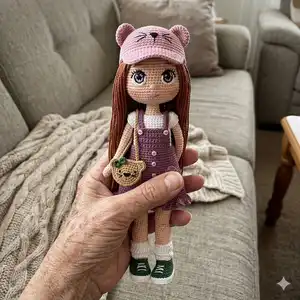
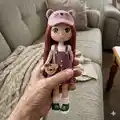
🧢 Beautiful ✨ Detailed πŸ’ Adorable

Mimosa Baby Amigurumi Pattern

Mimosa Baby Amigurumi Pattern
4.7β˜… Rating
12+ Hours Time Needed
3.5K Made This
βœ‚οΈ

Intermediate Level

Ideal for those with basic crochet experience, featuring slightly more advanced stitches and techniques to expand your skills.

⏱️

Multi-Day Project

A rewarding 12+ hour journeyβ€”perfect for dedicated crafters who love detailed work.

🧸

Cute Companion

An adorable friend to cherish, handcrafted with love to bring comfort and joy for years to come.

About This Mimosa Baby Amigurumi Pattern

This pattern teaches you how to crochet the Mimosa Baby amigurumi doll with full step-by-step instructions. It includes head shaping, embroidered eyes, facial feature placement, arms, feet and leg shaping. The pattern uses photo references and clear rounds to help you follow along.

Mimosa Baby Amigurumi Pattern crochet pattern - detailed view of completed project

You'll learn embroidery techniques for expressive eyes and lips, and how to shape limbs for a natural pose. Materials and tool lists are provided so you can prepare everything before you start.

Why You'll Love This Mimosa Baby Amigurumi Pattern

I absolutely love this pattern because it brings a lot of character to a handmade doll through detailed eye embroidery and facial shaping. I enjoy seeing how the head transforms from a simple sphere to a lifelike face with small embroidery steps. The construction method creates sturdy limbs and a balanced body that stands well and looks polished. It is rewarding to finish the subtle details β€” eyelashes, brows and lips β€” because they instantly give the doll personality. I designed the instructions to be photo-assisted so you can follow each stage confidently and enjoy the whole creative process.

Mimosa Baby Amigurumi Pattern step 1 - construction progress Mimosa Baby Amigurumi Pattern step 2 - assembly progress Mimosa Baby Amigurumi Pattern step 3 - details and accessories Mimosa Baby Amigurumi Pattern step 4 - final assembly and finishing

Switch Things Up

I love how this pattern invites customization β€” try substituting hair yarn for different textures to create short or long hairstyles.

I often change dress colors and button choices to make outfits for different seasons or themes.

To make a mini keychain version, choose a thinner yarn and smaller hooks, and reduce limb lengths proportionally.

I sometimes add wire inside the arms so the doll can hold small props and pose more naturally.

You can swap embroidered eye colors (light blue, brown, green) using the Domino Cotton Perle shades to customize expressions.

Try adding felt accessories like a small hat or bag for more personality β€” sew them on securely using matching thread.

I sometimes age or blush the cheeks slightly with a dry crayon for a vintage look β€” apply lightly and fix if needed.

For a sturdier toy, use a small internal armature wire in the neck and legs as suggested in tools required.

I recommend experimenting with different stuffing densities to alter the silhouette β€” firmer stuffing gives a tidy shape while softer stuffing creates a cuddlier feel.

Finally, make matching sibling dolls with varied eye and hair combinations to create a charming set or a play family.

Common Mistakes & How to Fix Them

βœ— Skipping stitch markers at the start of rounds causes lost stitch counts; use a marker at the first stitch of every round to keep track. βœ— Understuffing pieces makes shapes collapse and look flat; stuff incrementally every 4-6 rows and shape as you go to maintain volume. βœ— Changing tension between pieces creates mismatched sizes; maintain consistent tension and check gauge before continuing to the next part. βœ— Not securing embroidery knots or ends results in loose details; tie or weave ends securely inside the head to avoid unraveling. βœ— Forgetting to count increases/decreases leads to unbalanced shaping; count after each increase or decrease round to ensure correct stitch numbers.

Mimosa Baby Amigurumi Pattern

Create a charming Mimosa Baby amigurumi with step-by-step instructions and detailed assembly notes. This pattern guides you through head shaping, embroidered eyes, facial features, arms, feet and legs to craft a fully finished 35cm doll. You'll find materials, abbreviations and helpful tips to make the process smooth and enjoyable. Perfect for crafters who love detailed, photo-assisted projects.

Intermediate 12+ Hours

Materials Needed for Mimosa Baby Amigurumi Pattern

β€” Main Fabric

  • 01
    Peria Baby Soft Cotton skin color 17 - 2 pieces (main skin color)
  • 02
    Peria Baby Soft Cotton white 13 - 1 piece (white details)
  • 03
    Schachenmayr Catania green 419 - small amount (shoes/leaves)
  • 04
    Schachenmayr Catania purple 240 - small amount (dress)
  • 05
    Gazzal Baby Cotton lilac 3422 - small amount (dress)
  • 06
    Trade Diva 55 - small amount (hair base or accents)
  • 07
    Paper rope dark straw - length for purse/props
  • 08
    Viburnum Etamine 840 for hair - 2 skeins
  • 09
    Domino Cotton Perle 8 light blue K0028 - eyes
  • 10
    Domino Cotton Perle 8 dark blue K00147 - eyes
  • 11
    Domino Cotton Perle 8 brown K0035 - eye detail
  • 12
    Domino Cotton Perle 8 white - eye highlights
  • 13
    Domino Cotton Perle 8 black - pupil outlines
  • 14
    Orenbayan Cotton Perle pink 465 - lips/cheeks accents

β€” Tools Required

  • 01
    Crochet hook size 2.00 mm
  • 02
    Crochet hook size 2.20 mm
  • 03
    2.5 size skewer (for hair placement)
  • 04
    Bead fiber (polyester stuffing)
  • 05
    3 x 8mm white buttons for the back of the t-shirt
  • 06
    1 x 8mm purple button for the back of the dress
  • 07
    7 x 6mm white buttons for the front of the dress
  • 08
    Etamine needle for sewing and quilt/embroidery needles for eye embroidery
  • 09
    Pacifier chain rope parachute rope half meter for shoelaces
  • 10
    70 cm 2.5mm electrical wire to put on neck and arms (for internal structure)
  • 11
    Dry crayon for make-up and aging
  • 12
    Scissors
  • 13
    Yarn needle for sewing
  • 14
    Stitch markers
  • 15
    Pins for assembly

Progress Tracker

0% Complete

β€” Head :

Row 1 :

6x into the magic ring

Row 2 :

6v (12)

Row 3 :

(x, v)*6 (18)

Row 4 :

(2x, v)*6 (24)

Row 5 :

(3x, v)*6 (30)

Row 6 :

(4x, v)*6 (36)

Row 7 :

(5x, v)*6 (42)

Row 8 :

(6x, v)*6 (48)

Row 9 :

(7x, v)*6 (54)

Row 10 :

(8x, v)*6 (60)

Row 11 :

(9x, v)*6 (66)

Row 12 :

(10x, v)*6 (72)

Rows 13-27 :

15 rows: 72x

Info :

Go to eye processing. After the eye embroidery is finished, the head will continue to be knitted.

β€” Eye Processing :

Step 1 :

Identifying eye locations: Align with the third increment loop of the head in the 12th row and place a marker between the 21st and 22nd rows with a pin. This is the midpoint between the two eyes. Make a mark with a pin by counting 6 sc to the right of the pin and 5 to the left of the pin. Remove the pins by placing dots in the designated places with the flying pen. Pupils will be embroidered on the marked places.

Step 2 :

There are 11 sc between the points we marked to process the pupils. Eye distance can be zoomed in and out optionally.

Step 3 :

The concept of tour will be used when processing the eye. The tour consists of two stages. In the first stage, basting is done by sinking into the folds of the frequent needles. In the second stage, the round is completed by going through all the basting stitches.

Step 4 :

one- Draw a circle with a flying pencil so that the diameter of the pupils corresponds to two single needles. Attach a single layer of black domino thread to the needle. Complete the first step by basting the circumference of the circle from the multiples of the frequent needles. In the second stage, complete the tour as in the image by passing from the outside to the inside under each of the stitches you have worked on.

Step 5 :

Remove the needle from the upper part of the eye and pass under the opposite stitches to fill the pupil. Process horizontally all the way down, taking care not to overlap the threads while embroidering.

Step 6 :

If you could not provide an oval image to the pupil as in the image, try to get the correct shape by sinking around it a few times. Process the other pupil in the same way.

Step 7 :

Draw the iris of the eye in a circle, leaving a single needle around the pupil. Starting from the upper part of the eye with dark blue thread, embroider around the iris by basting from the fold of the loops. Complete the round as in the image by passing under each of the stitches you have embroidered from the outside to the inside.

Step 8 :

Process one more round into the iris.

Step 9 :

Embroider the upper half of the iris with another round of dark blue thread. The remaining half will be embroidered with light blue thread.

Step 10 :

With a double layer of light blue thread, embroider the half part under the pupil. The width and length of the iris is 4 sc. Process the other iris in the same way. If there are gaps in the processed areas, retouch the gaps by sinking into the head.

Step 11 :

To embroider the white part of the eye, draw a circle starting from the bottom row of the inner part of the eye and ending at the highest point of the outer part of the eye, as in the image. The part of the circle on the nose side of the eye should be the width of a single needle, expand a little more towards the outer part, and taper a little more towards the top.

Step 12 :

Complete the first step by basting around the circle you have drawn, starting from the top. At the end of the first stage, remove the needle from the starting point and complete the tour by doing the second stage.

Step 13 :

Do one more round in the same way.

Step 14 :

Since the upper white part of the eye is full, start the new round from the untreated area and process one more round. If there are 3 rounds of processing on the white part, but there are still empty spaces, one more round can be made or the empty spaces can be retouched.

Step 15 :

A round will be made with the same technique between the blue and white part of the eye with the black rope. Process the other eye in the same way.

Step 16 :

Lash bottom line: one- Sink into the second row from the bottom of the outer part of the eye. Baste up to the corner of the eye. Complete the tour by sinking in from the eye spring and leaving the starting point and embroidering over the basting stitches. Do one more round, starting from the top row of the lower lash line and up to the corner of the eye.

Step 17 :

Eyelash: one- Come out from the upper row of the lower line of the eyelash as in the image and sink into the root of the eyelash. Repeat the same action on the same eyelash. Determine the places of the other eyelashes as in the image. The technique of processing eyelashes is as follows. First, a small eyelash will be processed by sinking further than the point you have determined. Then, insert the needle under the small eyelash and exit from the point you have determined and sink into the root of the eyelash. Complete the other eyelashes with this technique.

Step 18 :

Eye shimmer: Attach two layers of white thread to the quilt needle. Process both eyes in the same way as in the pictures. Eye processing is finished. The head will continue to be knitted.

Row 28-30 :

3 rows: 72x

Row 31 :

2x, a, (10x, a)*5, 8x (66)

Row 32 :

5x, a, (9x, a)*5, 4x (60)

Row 33 :

(8x, a)*6 (54)

Row 34 :

2x, a, (7x, a)*5, 5x (48)

Row 35 :

5x, a, (6x, a)*5, x (42)

Info :

You fill the head. Fill the head while keeping it round and homogeneous in stuffing; fill to the sides after filling so the head becomes more rounded.

Row 38 :

2x, a, (5x, a)*5, 3x (36)

Row 39 :

(4x, a)*6 (30)

Row 40 :

(3x, a)*6 (24)

Row 41 :

(x, a)*8, sl st (16)

Info :

Head done, cut the rope. Fasten off leaving a tail for sewing.

β€” Nose :

Info :

It will be embroidered by leaving two single needles spaced, two rows below the eye, coinciding with the middle level of the two eyes. Separate the yarn into layers. Process the nose by sinking in and out 4-5 times as in the image.

β€” Eyebrow :

Info :

Embroider the eyebrows one row above the lashes, leaving 9 single needles with a width of 5 sc between the two eyebrows. Follow the images.

β€” Lips :

Info :

Determine the place of the lip with pins, leaving 3 single needles down the nose, and 3 frequent needles. Attach the thread to the needle in two layers. To embroider the lip, the triangle shape will be created. Enter through the neck space and exit from the designated point on the left. Dive into the middle of the lip in the upper row and exit from the determined point on the right. To form the other side of the triangle, sink to the upper point and exit the neck space. Enter from the left of the lip and enter from the right and exit the neck cavity. Lip processing Youtube link provided in original PDF.

1st round :

Lip shaping will be created by wrapping the triangle. Insert the needle under the thread and exit from the top to embroider. Starting from the top left edge, loop the rope 5 times. Take care not to overlap the yarn and to keep it regularly side by side. Do the same to the right side of the upper lip. Complete the round by wrapping the bottom edge 6-7 times.

2nd round :

In the second round, if you make 3-4 loops on the outer lips and the loops on the lips towards the middle part, it will stop. Intensity of 4 to the lower lip, middle of the lower lip. Lip fullness can be increased upon request.

β€” Arm :

Start :

Start with skin color.

Row 1 :

6x into the magic ring

Row 2 :

2v, x, 2v, x (10)

Row 3 :

2x, v, 4x, v, 2x (12)

Row 4 :

3x, v, 5x, v, 2x (14)

Row 5 :

4x, v, 9x (15)

Rows 6-8 :

3 rows: 15x

Row 9 :

4x, a, 6x, a, x (13)

Row 10 :

11x (12)

Rows 11-36 :

26 rows: 12x, sl st, done break the thread.

Info :

The arms will not be filled with fibers. Knit the other arm in the same way.

β€” Foot Recipe :

Row 1 :

9ch check. Starting from 2ch, into the first loop 2x, 6x, into the same loop 3x, 7x (18)

Row 2 :

v, 8x, v, 8x (20)

Rows 3-10 :

8 rows: 20x

Row 11 :

3x, 7ch and skip 9x, 8x

Row 12 :

3x, 7x on 7 chain, 8x (18)

Row 13 :

(x, a)*6 (12) - continue with the heel part

Row 14 :

6a, the heel is over, leave a long rope to collect the heel and break the rope.

Info :

Gather the needle and 6 sc needles from the flo loops, tighten them well, knot the thread inside the foot and hide it. The foot is over, the leg will be passed. Knit the other foot in the same way.

β€” Left Leg Recipe :

Info :

While filling, the left foot and leg should always be filled to the left of the leg, creating a protruding image on the calf and carefully filling. If the filling in the feet and legs is not done carefully and regularly, the distorted and protruding appearance of the heels, calves and knees may not be available.

Row 1 :

We turn the back of the foot and pull the 7th loop, attach the thread to the 4th loop, 4x on the chain, one sc in the gap between the front part and the sole, 9x in the front, one sc in the gap between the front part and the sole, 3x on the chain (18)

Row 2 :

4x, a, float 7x, a, 3x (16)

Rows 3-6 :

4 rows: 16x

Row 7 :

v, 15x (17)

Row 8 :

17x

Row 9 :

x, v, 15x (18)

Row 10 :

18x

Row 11 :

2x, v, 15x (19)

Row 12 :

3x, v, 15x (20)

Row 13 :

20x

Row 14 :

4x, v, 15x (21)

Row 15 :

21x

Row 16 :

5x, v, 15x (22)

Row 17 :

22x

Row 18 :

6x, v, 15x (23)

Rows 19-23 :

5 rows: 23x

Row 24 :

5x, a, x, a, 13x (21)

Row 25 :

21x

Row 26 :

4x, a, x, a, 12x (19)

Row 27 :

5x, a, 7x, 4v, 3x (22)

Row 28 :

22x

Row 29 :

13x, 4a, x (18)

Row 30 :

4x, v, x, v, 11x (20)

Row 31 :

20x

Row 32 :

6x, v, 13x (21)

Row 33 :

21x

Row 34 :

7x, v, x, v, 11x (23)

Row 35 :

23x

Row 36 :

8x, v, 14x (24)

Row 37 :

24x

Row 38 :

9x, v, 14x (25)

Row 39 :

25x

Row 40 :

10x, v, 14x (26)

Row 41 :

26x

Row 42 :

11x, v, 14x (27)

Row 43 :

27x

Row 44 :

12x, v, 14x (28)

Row 45 :

4x with tan, 24x with white thread (28)

Row 46 :

28x

Row 47 :

4x, sl st, finish, break the thread. Left leg done.

β€” Right Leg Recipe :

Info :

When filling, the right foot and leg should always be filled to the right of the leg to create a protruding image on the calf. The right leg is knitted with the same recipe as the left leg until the 26th row. The difference in appearance in the two lower legs is all about filling. Keep the leg away and check the image frequently.

Row 1 :

We turn the back of the foot and pull the 7th loop, attach the thread to the 4th loop, 4x on the chain, one sc in the gap between the front part and the sole, 9x in the front, one sc in the gap between the front part and the sole, 3x on the chain (18)

Row 2 :

4x, a, float 7x, a, 3x (16)

Rows 3-6 :

4 rows: 16x

Row 7 :

v, 15x (17)

Row 8 :

17x

Row 9 :

x, v, 15x (18)

Row 10 :

18x

Row 11 :

2x, v, 15x (19)

Row 12 :

3x, v, 15x (20)

Row 13 :

20x

Row 14 :

4x, v, 15x (21)

Row 15 :

21x

Row 16 :

5x, v, 15x (22)

Row 17 :

22x

Row 18 :

6x, v, 15x (23)

Rows 19-23 :

5 rows: 23x

Row 24 :

5x, a, x, a, 13x (21)

Row 25 :

21x

Row 26 :

4x, a, x, a, 12x (19)

Row 27 :

5x, a, 7x, 4v, x (22)

Row 28 :

22x

Row 29 :

13x, 4a, x (18)

Row 30 :

4x, v, x, v, 11x (20)

Row 31 :

20x

Row 32 :

6x, v, 13x (21)

Row 33 :

21x

Row 34 :

7x, v, x, v, 11x (23)

Row 35 :

23x

Row 36 :

8x, v, 14x (24)

Row 37 :

24x

Row 38 :

9x, v, 14x (25)

Row 39 :

25x

Assembly Instructions

  • Attach head to body by sewing the neck opening made in the body to the opening at the base of the head; use whipstitch and the long tail left after closing round 41 of the head to secure firmly.
  • Position embroidered eyes on the head between the 21st and 22nd rows as directed in the Eye Processing section; pin the placement then embroider pupils, irises and lashes before finishing the head assembly.
  • Sew arms to the sides of the body at the desired height (refer to photos for placement); use a ladder stitch or whipstitch and secure with extra thread to keep them stable.
  • Sew feet/legs to the bottom of the body, orienting the left and right legs according to the leg recipes and filling guidance; match inner seams, pin in place and sew firmly to the body base.
  • Embroider nose, eyebrows and lips after the head is attached if preferred; follow the image sequence to create natural expressions and hide thread ends inside the head.
  • Pin hair placement and use the paper rope or etamine hair method shown to attach hair rows; use a yarn needle to stitch through head loops and secure the ends inside the head cavity.

Important Notes

  • πŸ’‘After a row that ends with sl st, when rising by pulling 1 or 2 chains at the beginning of the row make the stitch by dipping into the bottom loop of the chain.
  • πŸ’‘When a leg or arm is finished, sl st is used to close them; these sl sts are accepted as frequent needles when attaching them to the finished piece.
  • πŸ’‘Fill pieces every 5-6 rows to avoid lumps and to maintain the correct shape; pay attention to homogeneous filling for the best finish.
  • πŸ’‘Work with consistent tension and mark row starts with stitch markers to keep counts accurate during shaping and embroidery.

This Mimosa Baby amigurumi pattern helps you craft a sweet, poseable doll full of personality and hand-embroidered details. Follow the head and eye embroidery steps to bring expression to the face and use the leg filling tips for balanced shaping. Make one for a special gift or to add a handmade friend to your collection. 🧢✨😊

You ask,

we answer.

FAQs

What size will the finished piece be?

The finished amigurumi measures around 35 cm tall when knitted with the recommended yarns and hook sizes listed in the materials section.

Can I use different yarn weights for this pattern?

Yes, you can use different yarn weights but this will change the final size and may require different hook sizes; adjust stuffing and armature accordingly.

Do I need prior crochet experience for this pattern?

This pattern is rated intermediate because it includes detailed embroidery and shaping techniques; basic knowledge of amigurumi stitches and embroidery will be helpful.

How long does this project typically take to complete?

Most crafters will take multiple sessions to complete this project; expect a multi-day project of 12+ hours depending on embroidery and assembly time.