About This Book Folding Introduction Pattern
This illustrated tutorial teaches you how to create folded book art using a measured pattern (fold numbers). It walks through holding the book, marking each page accurately, and folding to reveal a snowflake design. The guide uses a 256-fold snowflake example and explains how to adapt for different book sizes.
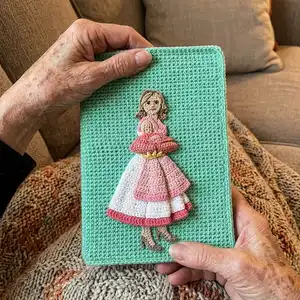
Perfect for crafters who enjoy precise paper crafts and decorative home projects. Follow the step-by-step photos and calculations to center your design and begin folding with confidence.
Why You'll Love This Book Folding Introduction Pattern
I absolutely love this project because it turns an ordinary book into a striking piece of art with minimal supplies. I enjoy the combination of careful measurement and the satisfying moment when the folded pattern emerges. The method is adaptable to many patterns and book sizes, so I always end up creating a unique piece for my home or for gifts. Folding is relaxing and tactile, and I love how a few hours of focused work transforms pages into a three-dimensional design.
Switch Things Up
I love experimenting with different patterns; try simple shapes like hearts first, then move to more complex snowflakes and letters.
I often change the starting page to shift the design higher or lower in the book for different display effects.
I sometimes use books with coloured edges or gilt pages to create a subtle contrast around the folded design.
I enjoy varying mark depths slightly to make more pronounced or softer pattern lines — just test on a single page first.
I occasionally add small paper cut accents glued onto folded peaks for extra dimensionality and sparkle.
I have tried combining two complementary patterns in one book by folding half the pages to one design and half to another for a split effect.
I recommend swapping the type of book: thicker, larger books give more dramatic sculptures while thinner books create delicate mini designs.
I like to finish my piece in a shadowbox or frame with a dark backing to make the folded pattern pop visually.
I sometimes use templates printed on transparent paper held beneath the page to visually check marks before committing to folds.
I encourage you to personalize designs by adding painted edges, small LED lights behind the fold, or a decorated book jacket for gift-ready presentation.
Common Mistakes & How to Fix Them
✗ Not lining up the ruler zero with the left edge of the page can shift every measurement; always align zero precisely before marking each page.
✗ Marking too close to the edge risks tearing or uneven folds; leave a small margin from the page edge when placing marks.
✗ Moving the ruler between mark one and mark two will produce incorrect fold distances; keep the ruler steady and make both marks before moving it.
✗ Failing to cross out completed fold numbers can lead to skipped pages or duplicate marks; cross out each fold number as you mark it to avoid mistakes.